

We often talk about moving the dial at Cambridge Ahead – making a material difference towards our good growth mission. 2025 has been a year where the dial moved in the right direction for Cambridge a number of times.
Major new investment into Cambridge and the OxCam Corridor has been announced, new plans that bake in a pro-good growth strategy have been published by policymakers, and new milestones have been achieved on big ticket interventions – like the announcements on new towns, reservoirs and railways we have seen.
Through all of this Cambridge Ahead has championed the case for Cambridge, produced data-driven insight that policymakers respond to, and focussed on the long-term needs of our city region.
The hard work, however, doesn’t stop: delivering on the progress of 2025 will require a continued push forward. Cambridge Ahead will continue to make the case for a Cambridge that really delivers on its promise.
Quarter One
Cambridge on the national stage
- The year opened with “Cambridge Can”, a joint New Year letter from civic, academic and business leaders – including Cambridge Ahead – to the government. It set out a clear offer: Cambridge stands ready to help drive national growth, if government supports investment in the city’s “hardware” – homes, water, transport and social infrastructure – to match the strength of its innovation “software”. With Cambridge framed as “the beating heart” of the growth mission – 2025 started as 2024 had ended – with Cambridge firmly centred in the national debate on growth.
Infrastructure – still the central piece of the puzzle
- Cambridge Ahead published The Infrastructure Gap: The Future of Sustainable Energy in Greater Cambridge, co‑produced with ARU’s Global Sustainability Institute, which showed that energy demand in Greater Cambridge is expected to triple by 2050 – and that grid constraints, skills shortages and funding gaps could become a brake on growth.
Connected clusters – Cambridge as a catalytic component of a network of growth engines
- We also launched the Growing Together Alliance research on connected clusters, which highlighted how places like Cambridge, Manchester and others can drive national prosperity when treated as an integrated system rather than isolated hotspots.
- Cambridge Ahead’s Spending Review response – shaped with members, and aligned with ecosystem partners – leaned heavily on this evidence, continuing to beat the drum for targeted funding into infrastructure.
- In March, we also released the latest iteration of gold‑standard research produced through the Cambridge Cluster Insights programme, confirming that the Greater Cambridge corporate economy has far outpaced the national economy.
- Knowledge‑intensive sectors have led the way, growing at over 6% annually, but the data also sounded a warning: the “birth rate” of new companies in the city region has more than halved in six years.
- The story was amplified in national coverage, notably in the Financial Times, in a piece exploring how Cambridge can be a model for kick‑starting Britain’s economy. This helped to bring the city’s strengths and constraints firmly into the national conversation – a position endorsed by Government.
Quarter Two
Attracting scaling investment, and promoting workplace wellbeing
- We kicked off this quarter with two round tables which spoke to different cross-cutting elements of Cambridge’s future success: employment and investment.
- Our round table on health and wellbeing in the workplace, co-convened with RAND Europe, saw CA members meet with Sir Charlie Mayfield – author of Government’s ‘Keep Britain Working’ Review – to compare best practice and consider interventions to support the physical and mental wellbeing of employees.
- We also held a session on scaling capital investment into high growth Cambridge firms to crystallise a Cambridge approach to increasing access to domestic scaling capital. This discussion has led to further CA thinking in this space, with a new focus on the demand-side and supply-side challenges affecting access to growth finance for Cambridge’s high potential firms. This will also be a significant priority for 2026.
Streamlining local governance
- The middle of the year saw local government reorganisation come to the fore. Government invited Cambridgeshire and Peterborough councils to bring forward proposals to move to unitary arrangements, with options for new councils now under consideration. Cambridge Ahead’s statement on local government reorganisation welcomed the opportunity to design a system that is more coherent while stressing the need for stability, democratic accountability and a long‑term outlook on growth, infrastructure and quality of life.
Quarter Three
- In June, the Insight Series event brought Cambridge Ahead members into conversation with the new Cambridgeshire & Peterborough Mayor, Paul Bristow, to explore how devolution, transport and housing can support good growth in and around Cambridge. The discussion highlighted the opportunity and the complexity of aligning local, regional and national decision‑making around a shared growth mission.
- Government also published the Industrial Strategy, following a consultation period which Cambridge Ahead fed into. Our region is well-represented across the eight priority sectors the Strategy articulated – a fact borne out by the emerging Local Growth Plan which the Combined Authority worked on across the year.
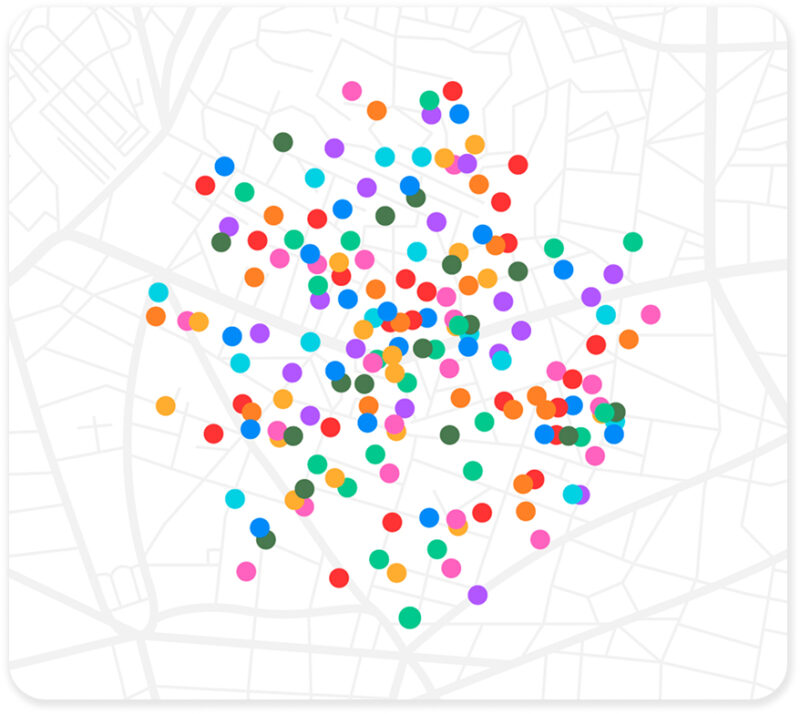
- September saw the publication of detailed research, produced with the Centre for Business Research, on the impact and growth of business parks and clusters across the Cambridge city region. The report showed that clustering has intensified significantly, with business parks and other large clusters now accounting for almost half of all corporate employment in the region. It also highlighted the critical role of transport links in shaping where growth is happening. This evidence is now feeding into ongoing spatial planning discussions.
A landmark announcement on investment
- October was a watershed moment for the wider Oxford–Cambridge Corridor, with Government announcing a half‑billion pound investment package for the corridor, including up to £400 million of initial funding to support growth and regeneration in Greater Cambridge via the Cambridge Growth Company – a clear signal of confidence in the city region. The Growth Company responded to this through the publication of a Strategic Growth Narrative, drawing heavily on Cambridge Ahead’s data and analysis – an endorsement of our focus on getting the evidence right.
Quarter Four
Big ticket transport infrastructure, and the future of spatial planning in Cambridge
- East West Rail confirmed its next phase, unlocking an estimated £6.7 billion of regional economic growth and up to 100,000 new homes by 2050. A new Cambridge East station has been added to the scope of the project (subject to third‑party funding). Together with Cambridge North, Cambridge South and the planned Cambourne station, this would give the city rail connectivity at every point of the compass – supporting strategic sites identified in the emerging Local Plan and relieving pressure on existing infrastructure.
- November’s Insight Series “House Blend” event – platforming the Cambridge Growth Company, Greater Cambridge Shared Planning and the Combined Authority together – was a space to reflect on local priorities for spatial planning. Coupled with insights from Dame Kate Barker on the work of the New Towns Taskforce, the event demonstrated the connection between spatial planning and transport infrastructure.
- Nationally, while many of the announcements relevant to our patch took place in October, November’s Budget also saw Government set out direction of travel on devolution and scaling innovation which have implications for Cambridge.
- The year is closing with a hugely significant development, as the draft Greater Cambridge Local Plan goes out to consultation. Covering the period to 2045, the Plan sets out a development strategy that seeks to balance the need for new jobs and homes with commitments on climate, biodiversity, social inclusion and great places. It proposes maximising brownfield and already‑allocated land, protecting the Green Belt and villages, and ensuring that growth is supported by the right infrastructure. Cambridge Ahead’s data has once again come to the fore – here being used to inform growth scenarios and spatial choices – and as ever, we are working with members to shape an informed response.
An evolving membership: Growing Cambridge Ahead’s coalition
Throughout the year, Cambridge Ahead’s own membership has continued to broaden, strengthening our ability to convene across sectors. New members Brydell Partners, Arup, Stantec, and the Wellcome Genome Campus bring deep expertise in investment, infrastructure and science to the table, alongside new voices such as Gonville Hotels enriching the sectoral diversity of our community and contributing important voices across our strategic priorities.
Looking ahead
Taken together, the events of 2025 show a city region that is central to the UK’s growth mission, but also acutely aware that good growth cannot be taken for granted. Infrastructure remains a live constraint that need to be addressed if Cambridge is to fire on all cylinders for the country, and for the benefit of local people. It’s also clear that alignment across statutory plans and strategies will be critical.
Cambridge Ahead will continue to deploy our data, analysis and insight to ensure that the next phase of Cambridge’s story delivers on its promise – for local people and for the UK as a whole.